
How to create a Mediterranean garden in the Aix-en-Provence region?
Designing a Mediterranean garden in Aix-en-Provence is not simply a matter of dealing with heat and light. It means embodying an elegant, demanding, luminous, and contrasting landscape.
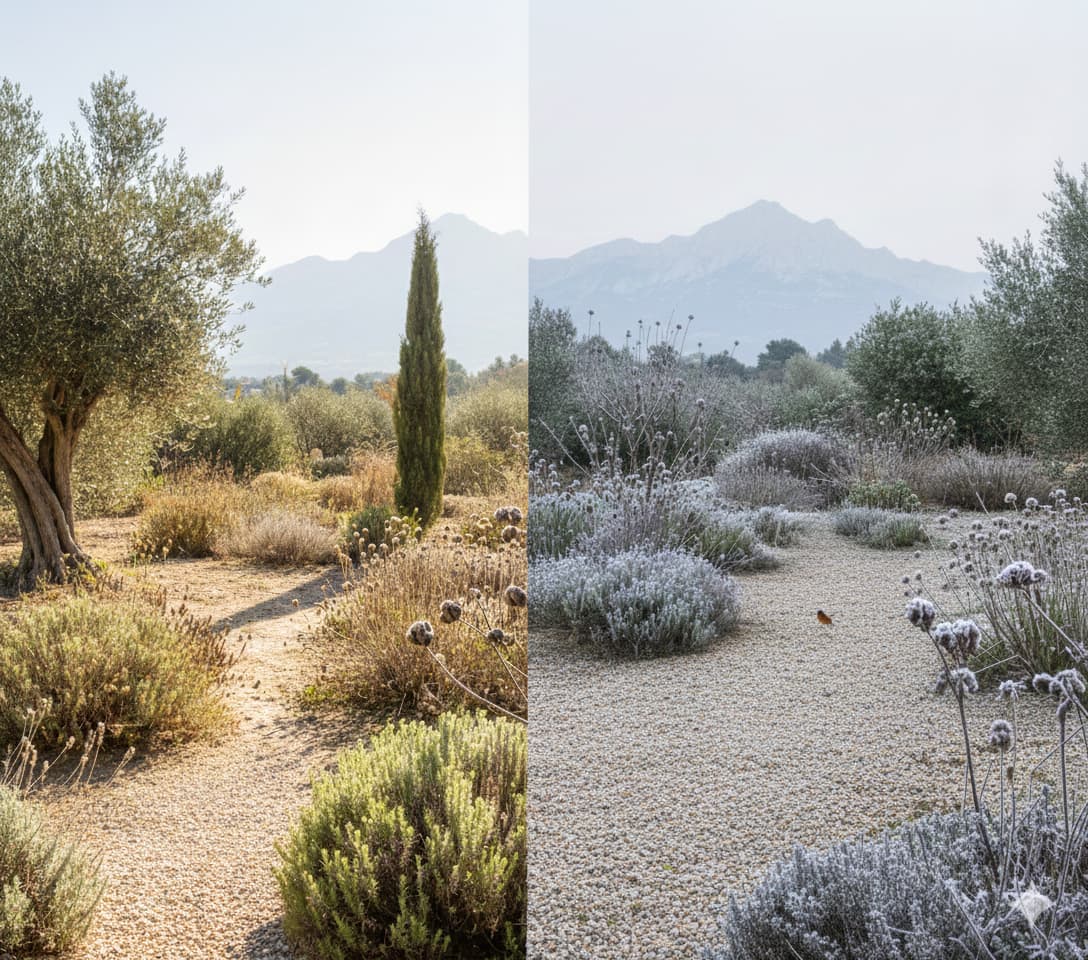
While Provence immediately brings to mind sunshine, cicadas, and olive trees, the climate in Aix is more nuanced than that of the Marseille coast. Winters are more pronounced, often five degrees colder than on the coast, with episodes of frost that are not so rare. Added to this are the mistral wind, limestone soils, and prolonged summer drought.
Creating a Mediterranean garden in the Pays d'Aix, stretching to the Luberon, the Alpilles, and Sainte-Victoire, requires a detailed understanding of the area and its balance.
The Pays d'Aix is located in the heart of a rich but fragile environment, marked by a certain amount of urban pressure, summer drought, sometimes harsh winters, and a significant risk of fires.
Plant diversity will be expressed in a controlled and structured composition. It will comply with legal requirements while creating pleasant living spaces for you and welcoming habitats for local wildlife.
Read the landscape before drawing
Every project begins with careful observation.
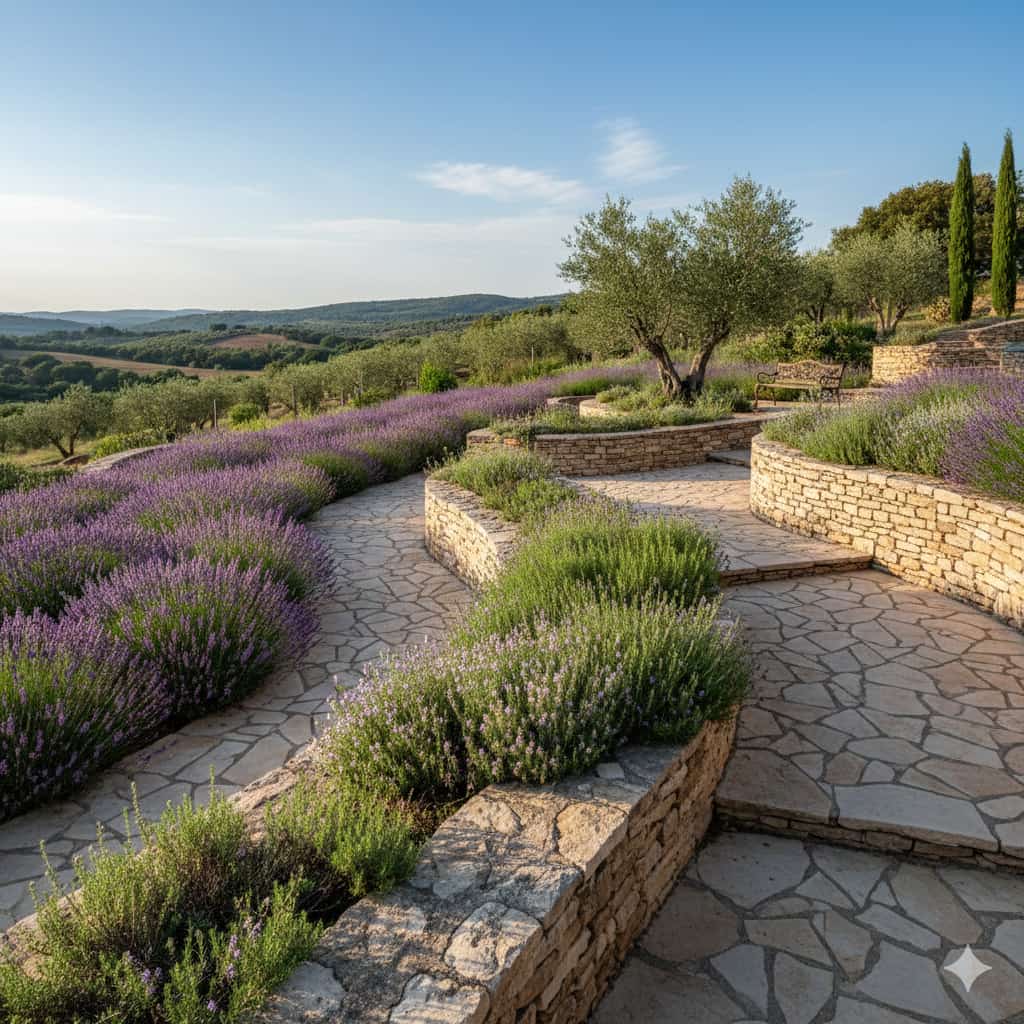
The plants that make up the surrounding local landscape. The nature of the soil, the sun's path, the prevailing winds, the views to be revealed, preserved, or concealed... Everything counts. A terraced plot cannot be approached in the same way as a flat plot. A property exposed to the mistral wind requires discreet protection, elegantly integrated into the surroundings.
The garden must never impose itself on the site. It must extend its logic, naturally.
A fair and sustainable plant palette
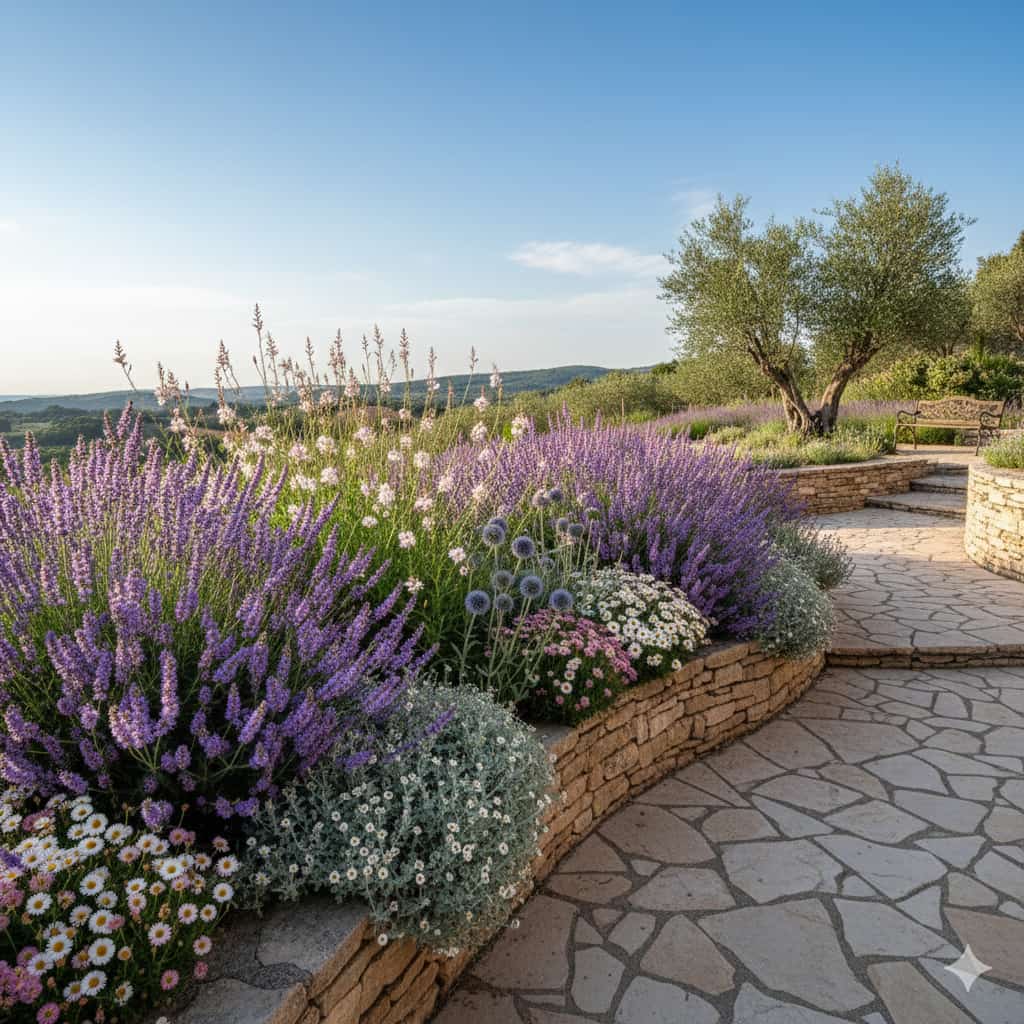
Trees, shrubs, and palm trees structure the landscape and anchor the garden in time by providing verticality, shade, and depth.
At their base, sub-shrubs and perennials form a simple, fragrant framework that remains vibrant throughout the year.
Light grasses add movement and texture without weighing down the overall effect.
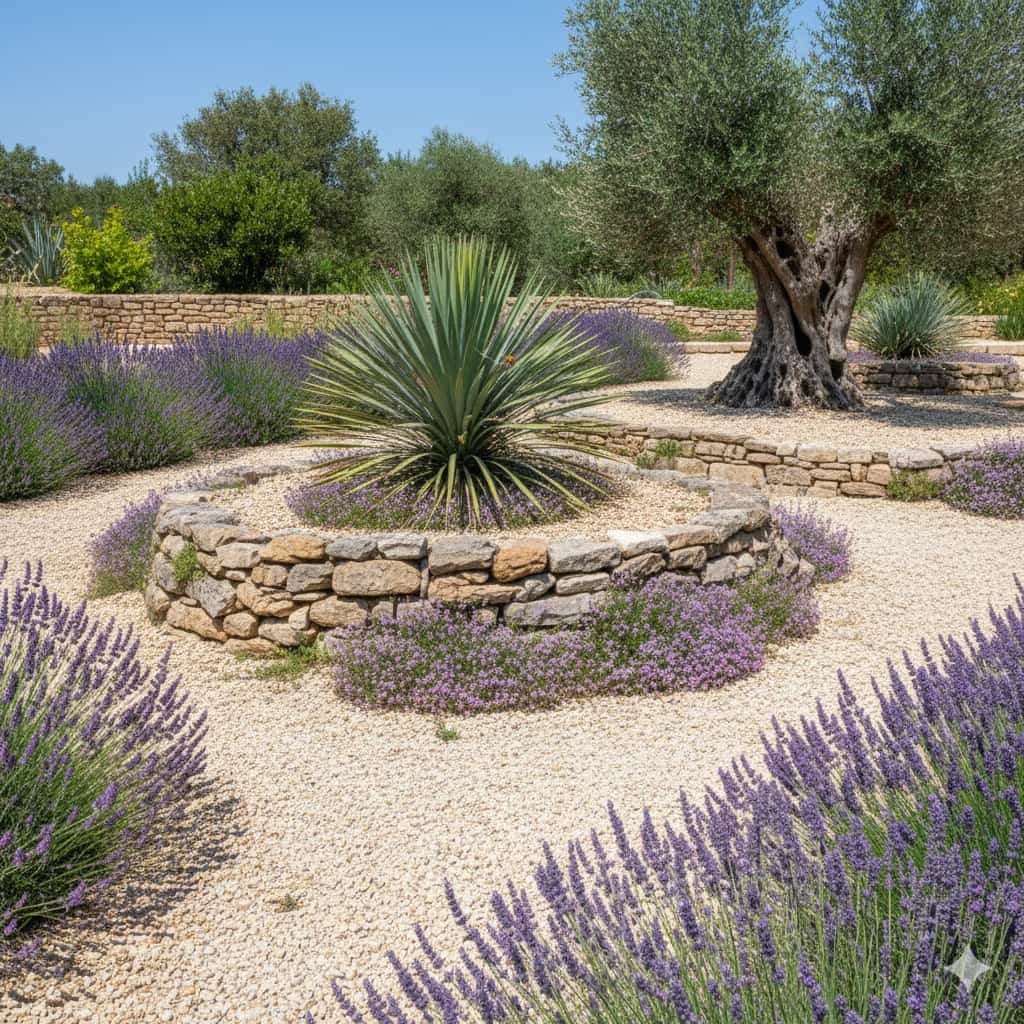
Rockery features add structure to the garden, while ground covers stabilize the soil, limit evaporation, and reduce maintenance requirements, completing the picture.
The key is balance. An elegant Mediterranean garden is based on harmony.
[See box at bottom of page]
Sustainable water management
While winters can be cool, summer remains the defining season.
The design of a contemporary Mediterranean garden favors targeted irrigation and effective mulching (with ground cover, for example), controlled plant density, and proactive rainwater management.
Water is a precious resource that must be used wisely.
A sustainable garden is a garden designed to limit water use.
Creating living spaces, not just plantations
A Mediterranean garden is not just a palette of plants; it is an atmosphere, scents, colors...
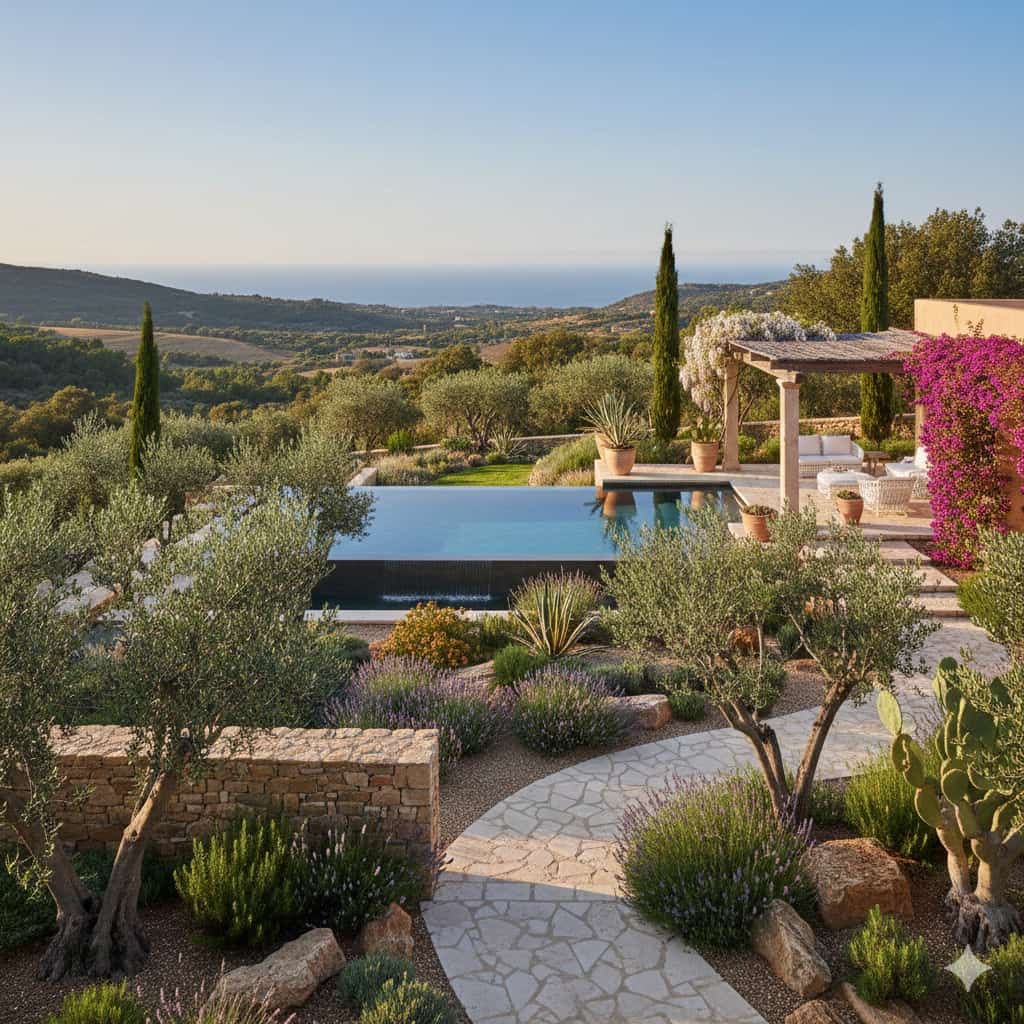
It must be a space where life is good: a shaded terrace protected from the mistral wind, a discreet path winding through lavender, a dry stone bench facing the landscape, a gentle transition between indoors and outdoors.
Light, shadows, and perspectives create an atmosphere. The garden becomes a natural extension of the architecture.
The stages of a controlled design process
To create your garden, it is important to plan it before you start planting. This project is divided into several stages:
1. Analysis
Careful observation of the site: soil, exposure, topography, constraints, and environment.
This stage allows the project to be adapted to the Mediterranean climate and the specific characteristics of the location.
2. Development
Design of a harmonious plan integrating uses, circulation, and regulatory requirements.
The project takes shape with clarity and consistency.
3. Selection
Choice of plants adapted to the Aix climate: resistant, water-efficient, and durable.
The goal: a garden that is aesthetically pleasing all year round and respectful of its environment.
Mini vegetable palette adapted to the Aix region
Beyond the iconic species of the Mediterranean garden, certain species can be adapted to the Aix region. Some help to strengthen ecological resilience while supporting local biodiversity. The species listed below can withstand limestone soils, dry summers, and occasional heavy frosts.
🌳 Small and medium-sized trees
🌴 Palm trees
🌵 Rock garden charts
🌱 Ground covers
🌿 Structuring and honey-producing shrubs
🌸 Perennials and subshrubs
🌾 Grasses (Poaceae)
💡 Incorporate the obligation to clear brush
In the Pays d'Aix region, the issue of brush clearing cannot be ignored. Regulations require specific maintenance of the areas surrounding homes and land in many areas exposed to fire risk.
Reducing plant density, controlling vegetation continuity, maintaining safety distances: these legal requirements are an integral part of the design.
Far from detracting from the project, they encourage the creation of a more structured, more legible garden, where each plant has its place without creating overload.
Aesthetics and safety are not mutually exclusive; they can coexist harmoniously.
In conclusion
This means accepting colder winters than those experienced by the sea, accepting the need to clear brush, and working with the climate rather than against it.
A successful Mediterranean garden does not seek to be spectacular, but rather elegant.
It blends into the landscape, changes with the seasons, and becomes more harmonious over time.
Your Mediterranean garden will combine formal simplicity, regulatory compliance, and ecological richness, while blending seamlessly into the Provençal landscape.
Useful links
Websites for further information